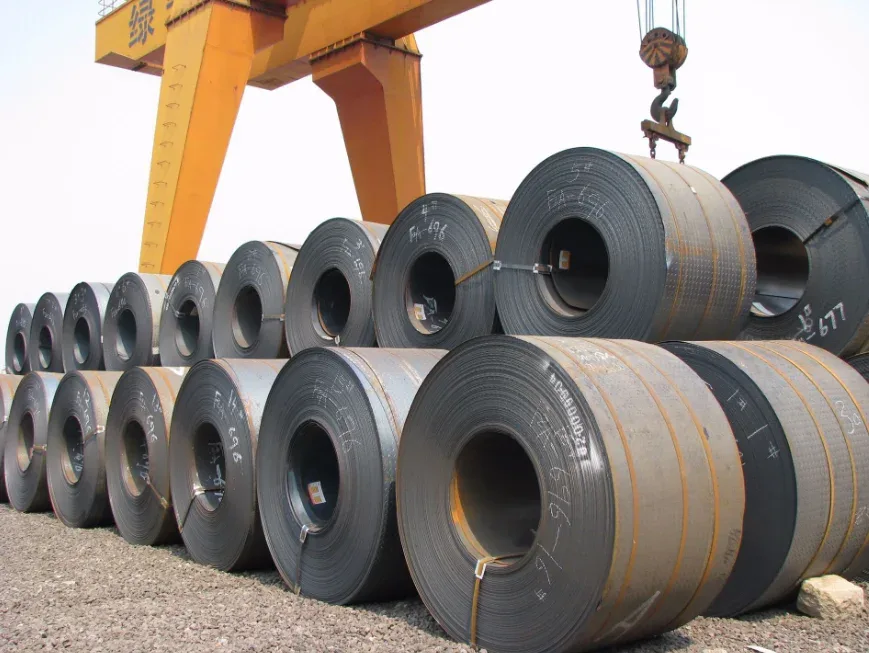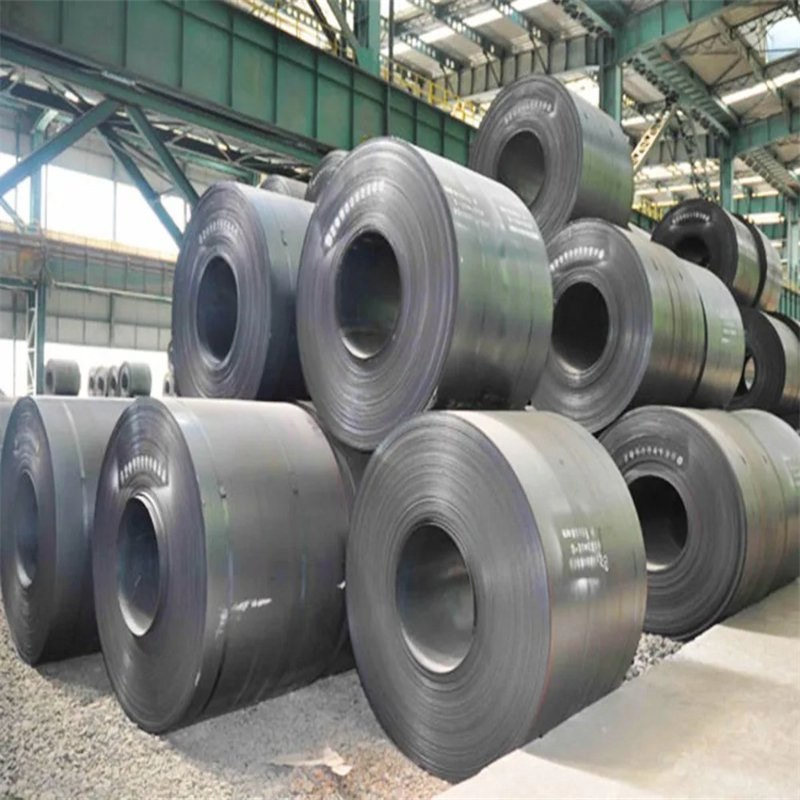
Steel coils are coiled steel products processed by hot rolling or cold rolling, typically ranging in thickness from 0.26 to 5 mm. They are characterized by good formability and excellent mechanical properties. Their coiled shape facilitates rapid loading and unloading using lifting equipment, and when used with specialized pallets or transport racks, storage and transportation efficiency can be improved. However, the cylindrical structure requires reinforcement devices (such as flip-up cushions) during transportation to prevent the risk of rolling.
Based on differences in surface treatment processes, steel coils are mainly classified into hot-rolled coils, cold-rolled coils, and galvanized coils. Hot-rolled coils are obtained through high-temperature rolling, resulting in high strength and ease of processing; cold-rolled coils are cold-formed, achieving high dimensional accuracy; galvanized coils have a zinc coating, providing excellent corrosion resistance.
Steel coils have a wide range of applications, covering multiple industrial sectors:
- Automotive manufacturing: Hot-rolled pickled coils can be used to produce automotive parts such as subframes, wheel spokes, and beams, replacing some cold-rolled sheets to reduce costs.
- Home appliance industry: Due to their good scratch resistance and weather resistance, steel coils are often used to manufacture components such as housings and compressor casings.
- Building Structures: Hot-rolled steel coils are used for large building frames and bridge supports, while galvanized coils are suitable for roofs, exterior walls, and other parts requiring corrosion protection.
- Machinery and Agricultural Equipment: This includes mining machinery, agricultural machinery parts (such as cab panels and windshields), as well as bicycle parts and welded pipes.
- Other Fields: Steel coils are utilized in areas such as new energy vehicles, smart home appliances, shipbuilding, furniture, and electrical cabinets due to their formability, strength, or corrosion resistance.