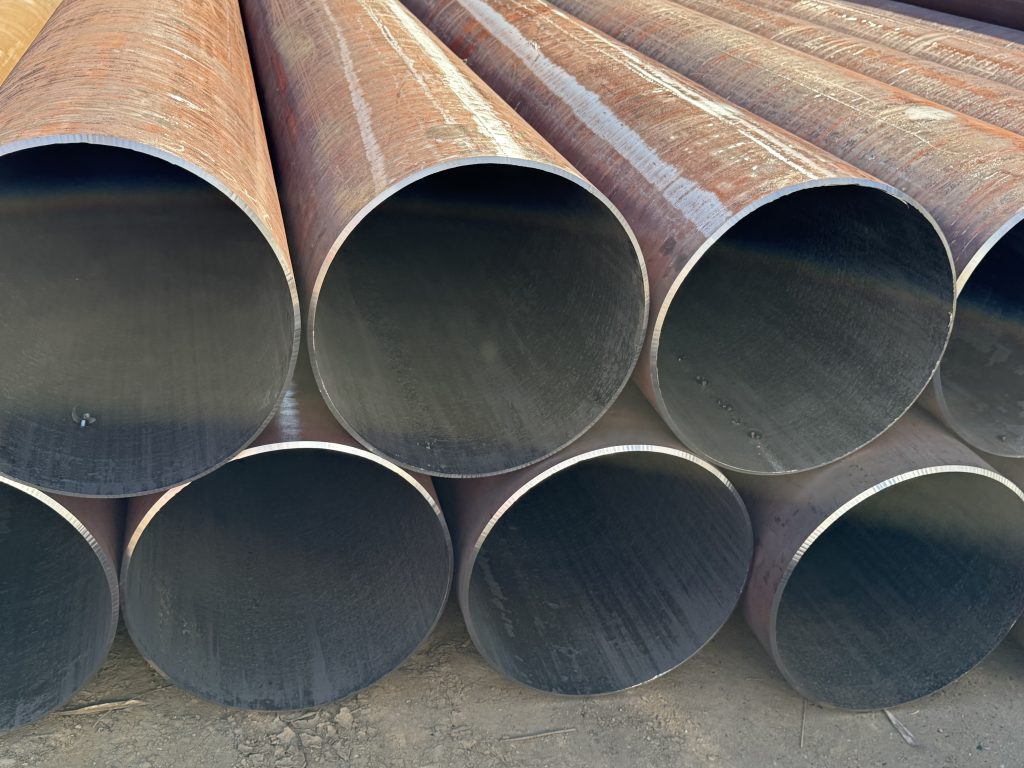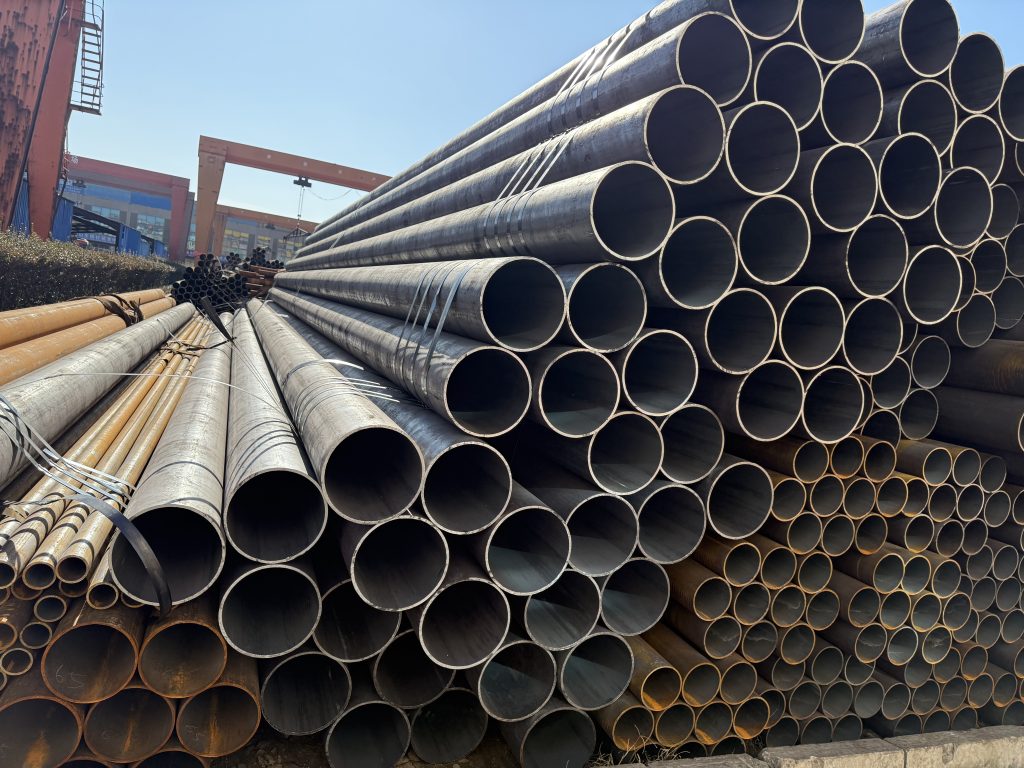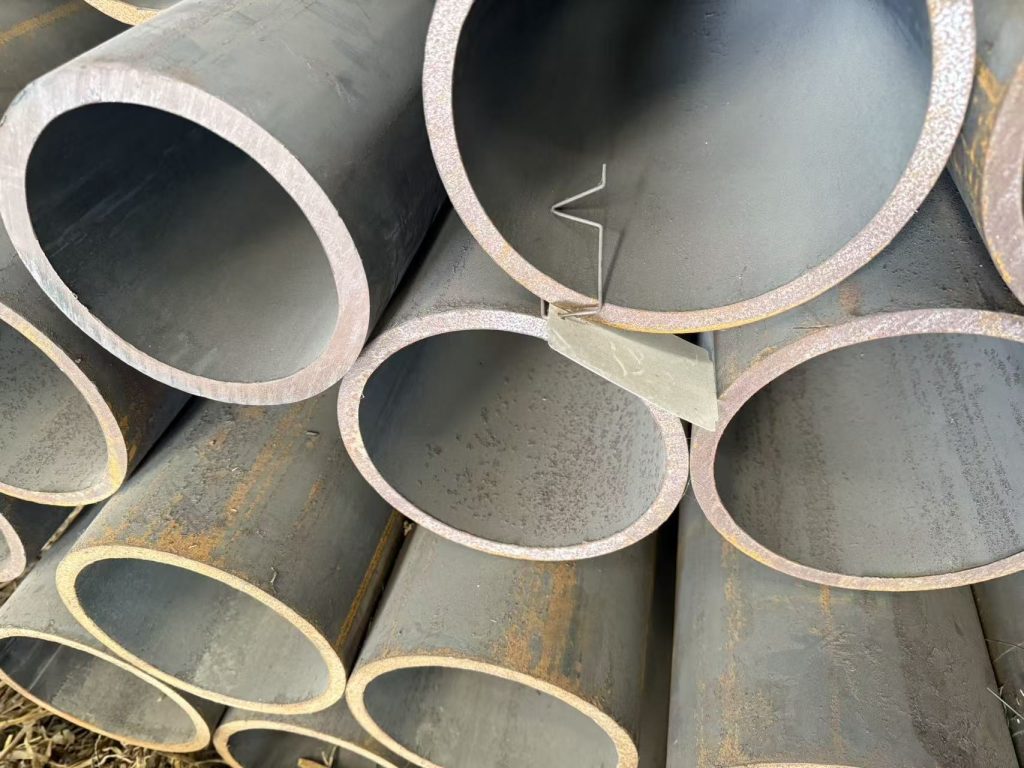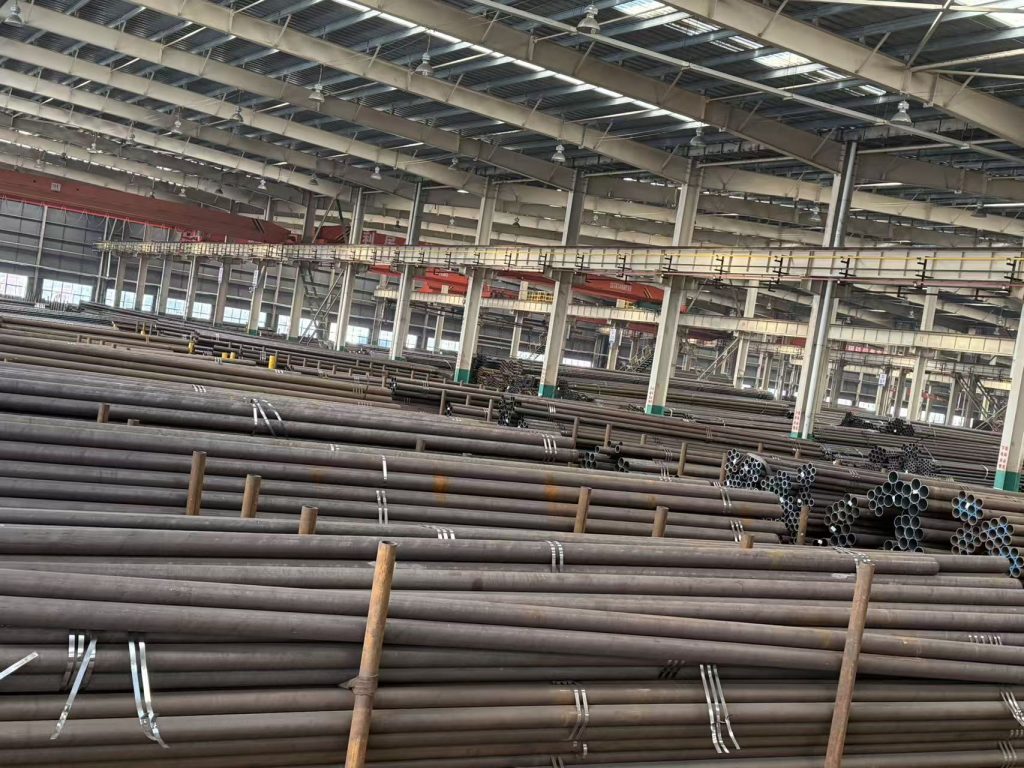
In industrial production and infrastructure construction, seamless carbon steel pipes are undoubtedly the “basic backbone.” Made from carbon steel through seamless processes such as hot rolling, cold drawing, and extrusion, they boast a seamless structure, excellent mechanical properties, and affordable cost, making them widely used in core sectors such as energy, chemicals, machinery, and construction—from boiler systems in large domestic power plants to oil and gas pipelines in Middle Eastern oil fields. Today, we’ll comprehensively unlock the key knowledge of seamless carbon steel pipes and use practical examples to help you select the right type and use them correctly.
As a core component in global industrial and infrastructure projects, carbon steel seamless pipes (CS seamless pipes) are favored for their weld-free structure, reliable mechanical properties, and cost-effectiveness. Widely used in oil & gas, power generation, chemical, and construction industries, they are the backbone of high-pressure fluid transmission and load-bearing structures—typical cases include boiler systems of large domestic power plants and oil & gas transmission pipelines in Middle Eastern oilfields. This guide is tailored for overseas buyers, engineers, and project managers to clarify selection criteria, international standards, and quality control points, helping you avoid procurement risks and optimize project efficiency with practical cases.
1. Core Advantages: Why Choose Carbon Steel Seamless Pipes?
The core competitiveness of carbon steel seamless pipes stems from their seamless manufacturing process. Compared to welded pipes, they possess three inherent advantages, proven in numerous key projects:
- High strength and pressure resistance: With no welded weak points and uniform material distribution, they can stably withstand high pressure and high temperature conditions. Tensile strength is generally ≥410MPa, and elongation ≥20%, making them suitable for critical applications such as hydraulic systems and boiler piping. A 300MW thermal power plant in China selected 20G carbon steel seamless pipes (compliant with GB/T 5310 standard) for its boiler superheater, which has operated stably for a long time at 450℃ and 10MPa, with a service life exceeding 15 years. High Strength & Pressure Resistance: Without weld weak points, the uniform material distribution ensures stable performance under high pressure and temperature. The tensile strength is generally ≥410MPa, and elongation ≥20%, which is widely used in hydraulic systems, boiler pipes, and offshore oilfield pipelines. For example, our ASTM A106 Gr.C seamless pipes have been applied in Qatar Al Shaheen Oilfield projects, with standing 15MPa pressure and 400℃ working temperature; a domestic 300MW thermal power plant adopted 20G carbon steel seamless pipes (complying with GB/T 5310) for boiler superheaters, operating stably at 450℃ and 10MPa for over 15 years.
Note: Carbon steel seamless pipes have moderate corrosion resistance. For acidic, alkaline, or H2S-containing media (such as offshore oilfields and chemical plants), additional anti-corrosion treatments (hot-dip galvanizing, 3PE coating, or laser cladding) are required. When the temperature exceeds 450℃, performance decreases significantly, so select grades like ASTM A106 Gr.C or 12Cr1MoVG for high-temperature scenarios.
2. Classification by Material, Application & International Standards
Understanding classification is key to accurate selection. Carbon steel seamless pipes are mainly categorized by carbon content, application, and international standards, with clear differentiation in applicable scenarios:
2.1 Classification by Carbon Content
- Low Carbon Steel (C≤0.25%): Representative grades: 10#, 20#, ASTM A53 Grade B. With excellent ductility and machinability, it’s the most widely used type for low-to-medium pressure fluid transmission and low-to-medium pressure boiler pipes. Suitable for urban gas pipelines, chemical plant cooling water systems, and general mechanical structures .
- Medium Carbon Steel (0.25%<C≤0.6%): Representative grades: 45#, 40Cr. After quenching and tempering, tensile strength ≥600MPa, hardness up to HRC45-50, widely used in mechanical manufacturing (automotive drive shafts, machine tool spindles) and hydraulic cylinders requiring high strength .
- Alloy Carbon Steel: Representative grades: Q345 (16Mn), 12Cr1MoVG, ASTM A106 Gr.C. Adding manganese, chromium, molybdenum improves strength and temperature resistance. Q345 series withstands ≥32MPa pressure for pressure vessels and marine pipelines; 12Cr1MoVG and ASTM A106 Gr.C are suitable for supercritical power unit pipelines .
2.2 Classification by Application & International Standards
International standards are the core basis for cross-border procurement. Common types and their applications are as follows:
- Fluid Transmission Pipes: Standards: GB/T 8163 (China), ASTM A53 Grade B (USA). Material: 10#, 20#. Outer diameter: Φ6mm-Φ219mm. Used for transmitting low-to-medium pressure fluids like water, steam, and natural gas. Strict hydrostatic testing and surface quality inspection are required to ensure sealing .
- Structural Pipes: Standards: GB/T 8162 (China), ASTM A500 (USA). Material: Q235B, Q345 series. Suitable for bridges, building supports, and mechanical frames, focusing on strength and processability.
- Boiler Pipes: Low-to-medium pressure: GB/T 3087 (10#, 20#); High pressure: GB/T 5310 (20G, 15MnG), ASTM A192 (USA). ASTM A192 is widely used in high-pressure boilers and superheaters, with service life over 150,000 operating hours in 600MW supercritical units .
- Special Working Condition Pipes: Low-temperature pipes: ASTM A333 Grade 1/6 (for sub-zero pressure pipelines); Oil & gas transmission pipes: API 5L (X42-X70 grades) for long-distance transmission. Improved anti-acid grades are developed for CCUS projects, with annual corrosion rate <0.1mm/a .
3. Procurement & Full-Cycle Usage Guidelines for Overseas Buyers
Scientific procurement and standardized use directly affect project safety and cost control. Here are key points for overseas buyers to ensure reliable product quality and stable operation:
3.1 Core Procurement Points
- Match Working Conditions Precisely: Determine material and specification based on medium (fluid/load-bearing), pressure, and temperature. For high-temperature scenarios, select ASTM A106 Gr.C; for low-temperature (-29℃), choose ASTM A333 Grade 6. Avoid material mismatch to prevent safety accidents .
- Verify Quality Certificates: Request mill test certificates (MTC) from suppliers, clearly indicating standard number, grade, specification, chemical composition, mechanical properties, and non-destructive testing results. High-pressure and low-temperature pipes require additional ultrasonic testing reports to meet ASME SA-450 Grade Ⅱ requirements .
- Inspect Appearance & Dimensional Accuracy: Check for cracks, folds, and scars on the surface. Cold-drawn pipes require high surface finish; dimensional accuracy should comply with standards (outer diameter ±1%, wall thickness ±10%, ovality ≤0.8% of nominal outer diameter). Leading manufacturers use laser measurement robots to ensure precision .
3.2 Storage & Transportation Specifications
Store in a dry and ventilated warehouse, avoiding mixing with corrosive substances (acids, alkalis, salts). Elevate 0.3-0.7m with sleepers to prevent rust from water accumulation. Separate different grades and specifications with labels. During transportation, bind firmly to avoid collision and scratch; seal pipe ends to prevent debris from entering. Thick-walled pipes require special supports for protection .
3.3 Installation & Maintenance Tips
Clean impurities inside the pipe before installation. Preheat thick-walled pipes (wall thickness >20mm) to 100℃-150℃ before welding, use matching welding materials, and control welding process. Conduct hydrostatic or air tightness tests after installation; put into use only if there is no leakage. During long-term operation, regularly inspect anti-corrosion layers, clean scale, and perform non-destructive testing on key parts to extend service life .
4. Common Misconceptions to Avoid
- Myth 1: Seamless pipes are always more corrosion resistant than welded pipes. — Correct answer: Corrosion resistance depends on the material and surface treatment, and has nothing to do with whether it is seamless or not. Carbon steel pipes all require targeted anti-corrosion treatment.
- Myth 2: Chinese national standards and American standards are interchangeable — Correct answer: The standards differ significantly (e.g., ASTM A106 requires Mn content ≥0.29%, while Chinese national standards do not have this restriction), and the selection must be strictly in accordance with the design specifications. They cannot be arbitrarily replaced.
- Myth 3: The thicker the wall, the better. Correct answer: The wall thickness needs to match the pressure rating. Excessive thickness will increase weight and cost, and may also affect processing performance. Just select the model according to the design parameters.
- Myth 1: Seamless pipes are more corrosion-resistant than welded pipes. Fact: Corrosion resistance depends on material and surface treatment, not whether it’s seamless. All carbon steel pipes need targeted anti-corrosion measures .
- Myth 2: Chinese standards and American standards are interchangeable. Fact: There are significant differences (e.g., ASTM A106 requires Mn content ≥0.29%, no such limit in Chinese standards). Select strictly according to design specifications .
- Myth 3: Thicker wall thickness is better. Fact: Wall thickness should match pressure level. Excessive thickness increases weight and cost, and affects processability. Select based on design parameters .
As a “universal pipe material” in the industrial field, the value of seamless carbon steel pipes lies in their precise adaptation to specific scenarios and standardized full-process control. Whether it’s energy transmission, machinery manufacturing, or infrastructure construction, selecting the right model and ensuring proper protection can maximize their performance advantages. If you need a more detailed selection plan for specific working conditions (such as high-pressure boilers or oil drilling), please leave a message to discuss and supplement the details!Carbon steel seamless pipes are indispensable in global industrial development. With our rich experience in serving overseas projects (such as Qatar oilfields and Saudi Aramco projects ), we provide customized solutions for different industries. Whether you need ASTM, API, or GB standard products, we can ensure compliance with international quality requirements and stable supply.
Contact us now for a free technical consultation and quotation. Our professional team will help you select the most cost-effective carbon steel seamless pipes for your project!he most cost-effective carbon steel seamless pipes for your project!