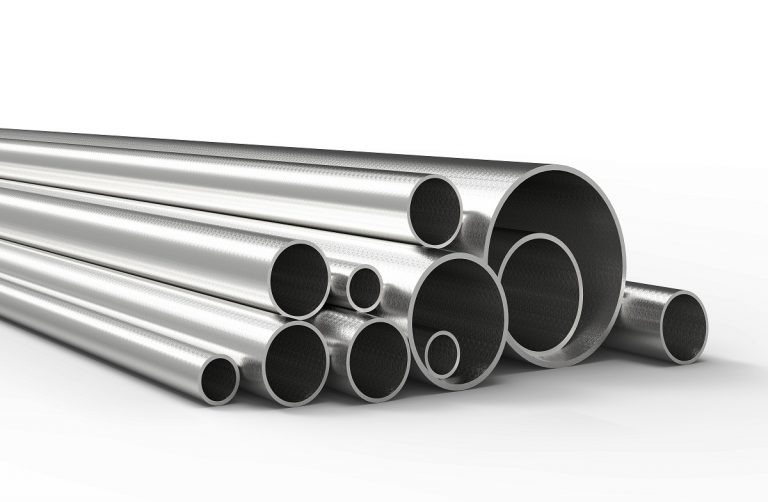
Stainless steel pipes come in many grades, each with different chemical compositions and properties, thus affecting their applications. Below are some common grades and their main applications.
Common Stainless Steel Pipe Grades and Applications
- 304/304L Stainless Steel Pipe: This is the most common grade. 304L improves corrosion resistance by reducing carbon content. It is widely used in food processing equipment (such as dairy pipelines and fermentation tanks), chemical industry for conveying mildly corrosive media, building decoration (such as curtain walls and handrails), environmental engineering (such as sewage treatment pipes), low-temperature environments (such as liquid nitrogen storage and transportation), and medical device fields.
- 316/316L Stainless Steel Pipe: Compared to 304, 316 contains molybdenum, resulting in stronger corrosion resistance, especially suitable for marine environments or media containing chloride ions. It is commonly found in chemical equipment (such as reactor pipelines), pharmaceutical industry, seawater desalination systems, medical facility water supply systems, and building decoration with higher requirements.
- 201 Stainless Steel Pipe: Belongs to chromium-nickel-manganese austenitic stainless steel, with lower cost, but generally lower corrosion resistance. Primarily used in light industry, furniture manufacturing, interior decoration, and other applications where durability requirements are not high.
- 321 Stainless Steel Pipe: Contains titanium, effectively preventing intergranular corrosion after welding. Suitable for structural components in high-temperature environments, such as boiler pipes and heat exchangers.
- 409/410 Stainless Steel Pipe: Belongs to ferritic or martensitic stainless steels, with high strength but poor corrosion resistance. Commonly used in automotive exhaust pipes, tool parts, and mechanical parts, where corrosion resistance requirements are relatively low.
- 310 Stainless Steel Pipe: Excellent high-temperature resistance, suitable for extreme temperature environments such as high-temperature furnace tubes and heat treatment equipment.
Selection Recommendations: In practical applications, the selection should be based on a comprehensive consideration of factors such as the corrosiveness of the medium, temperature, pressure, and cost. For example, drinking water systems often use 304 or 316L, while highly corrosive environments (such as chemical pickling) may require 316L or higher grades.