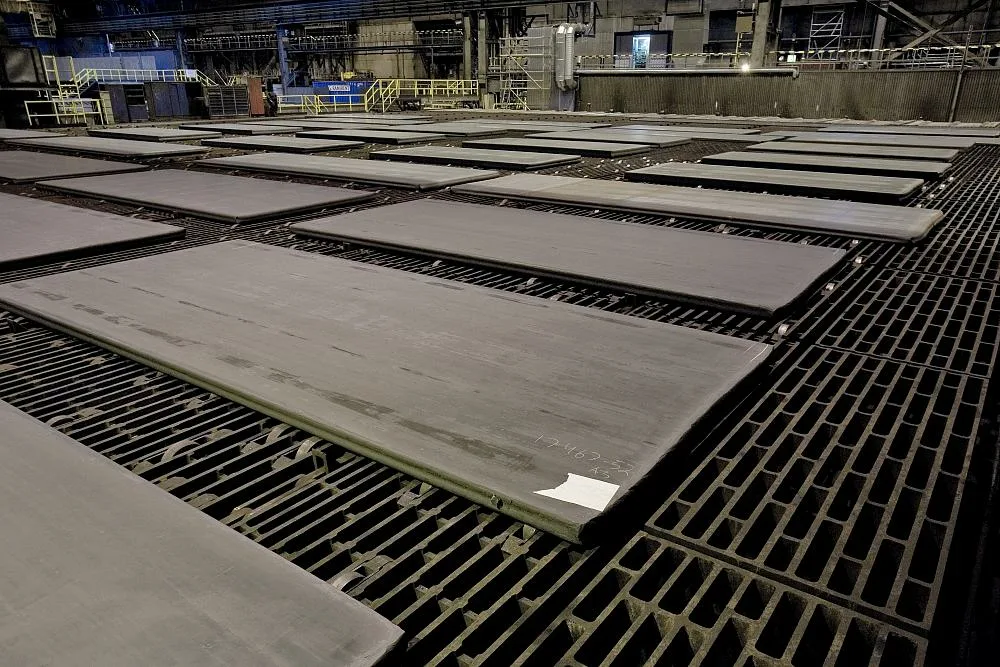
Wear-resistant steel plates are special steel plates designed specifically to resist wear. Their wear resistance is significantly improved by laminating a high-hardness alloy layer onto a base material or by using alloy steel. The base material is typically low-carbon steel or low-alloy steel, providing strength and toughness, while the surface layer is formed through a welding process to create a wear-resistant layer containing alloys such as chromium and manganese. The volume fraction of carbides (such as Cr7C3) can reach over 50%, with a macroscopic hardness ranging from HRC56 to 65. Its wear resistance can be 20 to 25 times that of low-carbon steel. These materials combine impact resistance, high-temperature resistance (up to 800℃), and corrosion resistance, supporting cutting, welding, bending, and other processing methods, making them suitable for manufacturing complex engineering components.
Wear-resistant steel plates are classified based on hardness grades. Common models include NM360, NM400, NM450, and NM500, where the numbers represent the Brinell hardness value (e.g., NM400 has a hardness of approximately 400 HBW). Different models correspond to different wear resistance levels and applicable scenarios.
In the industrial sector, wear-resistant steel plates are used across multiple industries:
- Power Industry: Used for components such as medium-speed coal mill liners, fan impellers, and dust collector flues in thermal power plants. NM360/400 steel plates with a thickness of 6-10mm are typically sufficient.
- Coal and Mining Industry: For applications requiring corrosion resistance and high strength, such as coal yard hoppers and crusher liners, NM400/450 or HARDOX series steel plates with a thickness range of 8-26mm are recommended. Mining machinery, such as crusher blades, requires materials with higher hardness, such as NM450/500, with a thickness of 10-30mm.
- Cement and Construction Industry: NM360/400 steel plates with a thickness of 10-30mm are commonly used for components such as cement vertical mill chutes and screw conveyor base plates.
- Construction machinery and metallurgical industries: Components requiring extremely high wear resistance, such as excavator buckets and loader blades, often use NM500 or HARDOX500 or higher steel plates, with a thickness of 20-60mm. Metallurgical equipment, such as sintering machine liners, requires high-temperature resistance and is suitable for HARDOX600 series steel.
此外,耐磨板还可以制成耐磨衬板等工程部件。模块化设计提高了安装效率,这些部件应用于砂磨机和铁路车轮等结构中,使用寿命可达数千小时。